
Omni
Sep 30, 2026
Clear Street
ChatGPT for Trading: Where It Works & Where It Breaks
.avif)
ChatGPT can act as a trading assistant, but it fails at real-time analysis and execution. Learn where ChatGPT breaks for trading and what to use instead.
Introduction
ChatGPT, Claude, and other LLMs are powerful tools for financial analysis and investing. They can summarize huge amounts of financial data, analyze market trends, and even teach foundational investing concepts.
But trading is a different beast. A corpus of text-based knowledge isn’t enough — LLMs need real-time financial data and the ability to adapt strategies quickly in a fast-moving environment. Most all-purpose AI chatbots simply can’t keep up, so you end up with hallucinated prices and out-of-date setups instead of genuinely useful analysis.
The solution isn’t to avoid AI for trading entirely. Instead, you need to know the limits of all-purpose LLMs for trading and stick to what they’re good at. In this guide, we’ll cover where ChatGPT works for trading, where it breaks, and what you need instead.
How you can use AI chatbots for trading
ChatGPT and other AI chatbots are best at the research and strategy side of trading, which don’t require real-time market data or access to a live brokerage account. Here are 5 actionable ways you can use them for trading.
1. Stock research
One of the best use cases for LLMs in trading is conducting basic research around stocks you’re interested in trading. ChatGPT can provide details about what a company does, where it operates, and even how customers feel about it. You can also use it to quickly summarize SEC filings and earnings transcripts, enabling you to better understand where a company is headed.
AI chatbots are especially adept at explaining how news or macroeconomic events might impact individual companies. You can ask AI how a company’s stock price might react to various outcomes (for example, the Fed raising interest rates or holding them steady) or even walk through potential price trajectory under a variety of different scenarios.
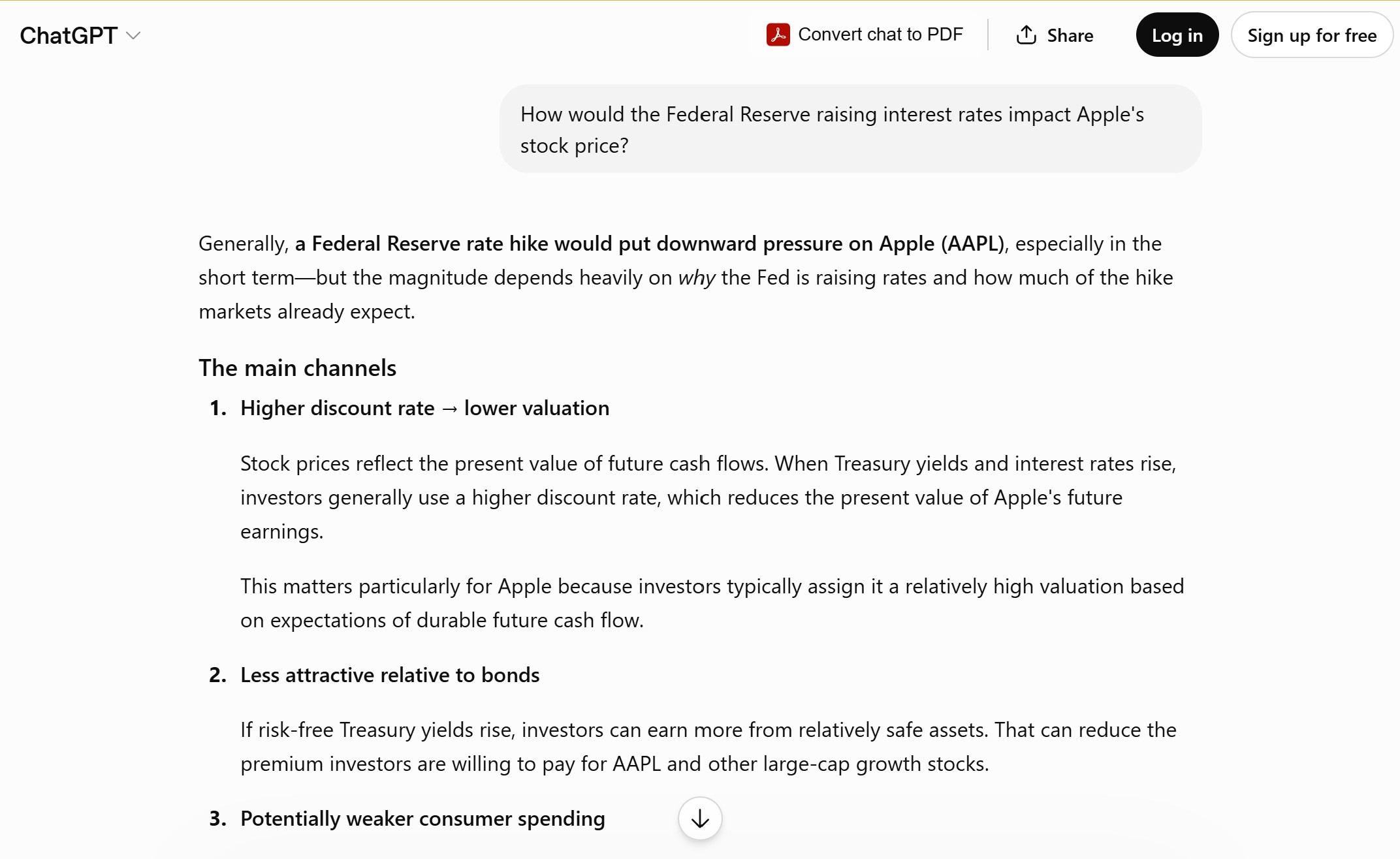
However, beware that ChatGPT and Claude shouldn’t be trusted for any fundamental research involving concrete numbers, like revenue figures or valuation ratios. Chatbots often cite outdated financial data or simply make up figures when they don’t have the data you ask for. Stick to general assessments, not deep financial dives.
2. Generating market reports
Another helpful way to use AI for trading is to generate market reports on a daily or weekly basis. Simple reports that cover upcoming earnings, macroeconomic events, overnight news, pre-market movers, and sector momentum can help set you up for the trading day and inform what tickers make it onto your watchlist.
You can also use AI to recap the trading day that just wrapped up. ChatGPT can perform some basic scanning functions to tell you which stocks experienced the highest volume or biggest moves.
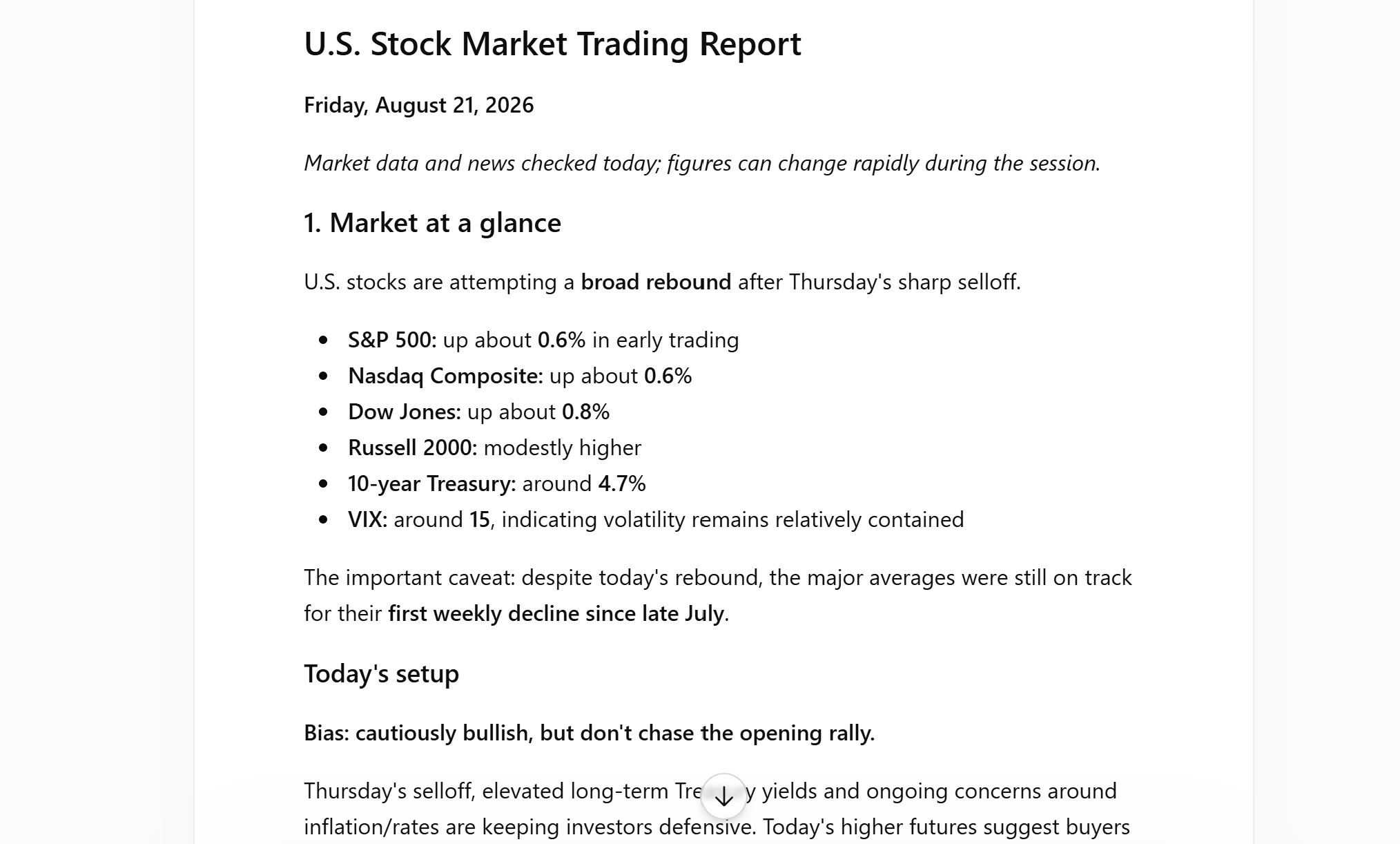
More importantly, it can also tell you what caused those moves and analyze trader sentiment so you can position for a follow-through or reversal the next day.
That said, be very cautious when using AI this way and always double-check information before acting on it. Chatbots don’t have a live market data feed, so they can be confidently wrong about basic market information more often than you might think. AI is particularly prone to getting number-based details like earnings dates and single-ticker price moves wrong.
3. Strategy development
A creative way to use AI for trading is to get help developing strategies. LLMs are great for brainstorming ideas, so you can use them to turn a vague starting concept into an actionable trading plan.
Say, for example, you want to build a strategy buying trending stocks that gap down at open, in anticipation of the longer-term trend continuing. ChatGPT can help you clarify that idea by defining what constitutes a strong trend, what gap size qualifies as an entry, and what conditions would cause you to exit. From there, the AI can help you build concrete entry and exit rules based on price action and indicators.
Even better, you can use a chatbot to poke holes in your strategy and improve it. For example, you can ask which factors you might be missing in your strategy, what additional conditions would make it more reliable, or which markets it is best suited for. Not all of AI’s suggestions will be helpful, so it’s up to you to evaluate what changes make the most sense for your strategy.
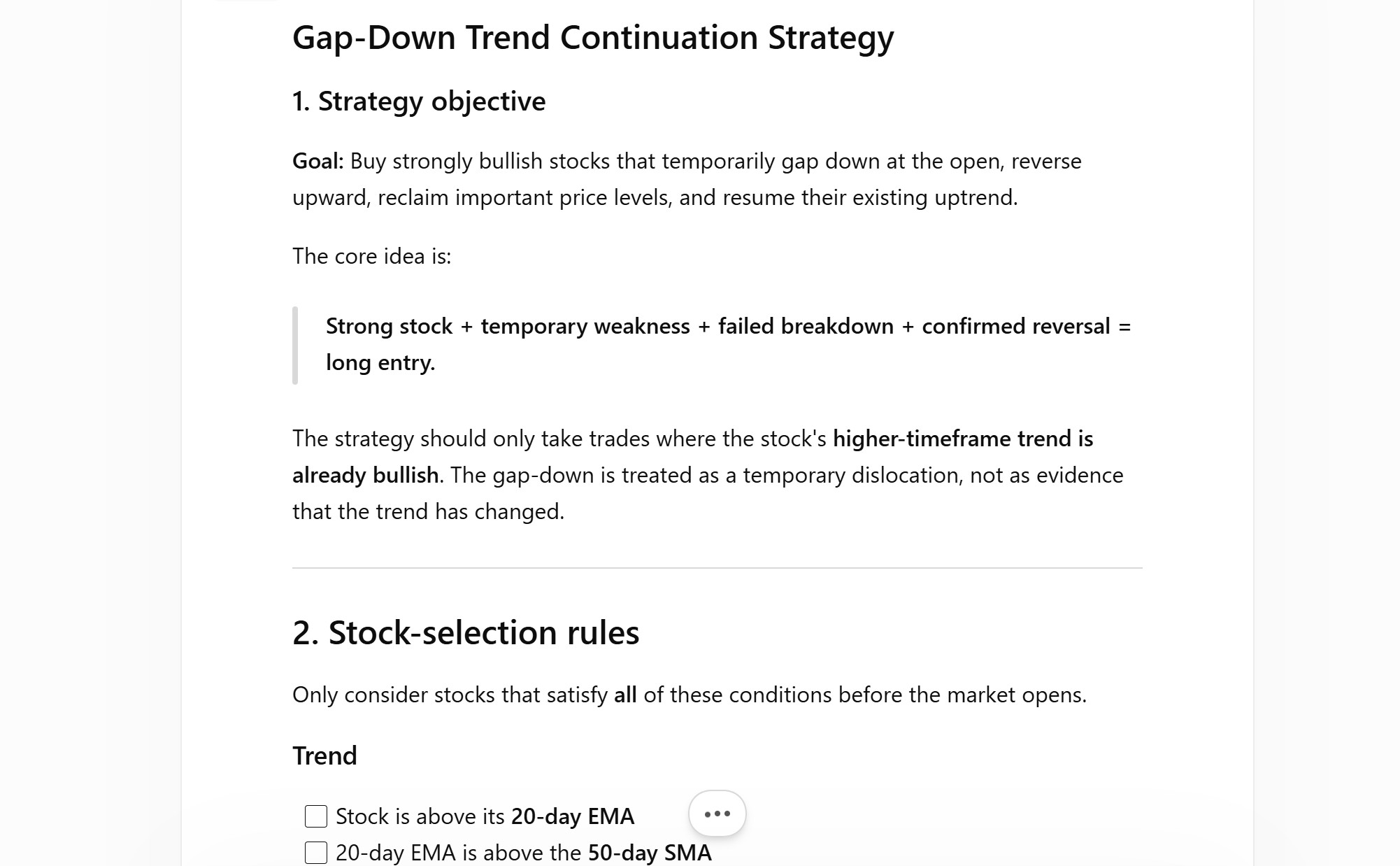
Chatbots can also go one step further, helping you write the code you need to test and implement your new strategy. First, you can ask your AI for a Python script to backtest your strategy using your favorite backtesting library. This makes it easy to analyze whether your strategy is historically profitable and optimize your entry and exit rules.
Once you’re confident in the strategy, AI can help you code it in Pine Script or thinkScript so you can run it in real-time. If you need a custom indicator to accompany your strategy, ChatGPT can help you code that, too.
Just make sure to paper trade AI-assisted strategies before risking real money on them. AI code isn’t guaranteed to be perfect, and it’s critical that you catch any bugs before putting your account at risk.
4. Analyzing trading data
In addition to building strategies, AI chatbots can help you analyze your trading data to spot patterns, capitalize on your best strategies, and reduce common mistakes.
You can start by importing all your trade data. LLMs are great at processing spreadsheets, so it’s easy to import trades from multiple brokerage accounts and combine them into a single analysis — even if each brokerage uses a different format for its data exports. If you add notes to your trades or tag them by strategy, AI will be able to read that data, too.
Once your chatbot has your trade data, it can run a wide range of analyses. For example, it can identify what market conditions have been most profitable for you or what tickers you’ve had the most success trading. It can also graph your strategies by P&L, chart your performance over time, or even read your notes to identify common conditions that led to profitable trades.
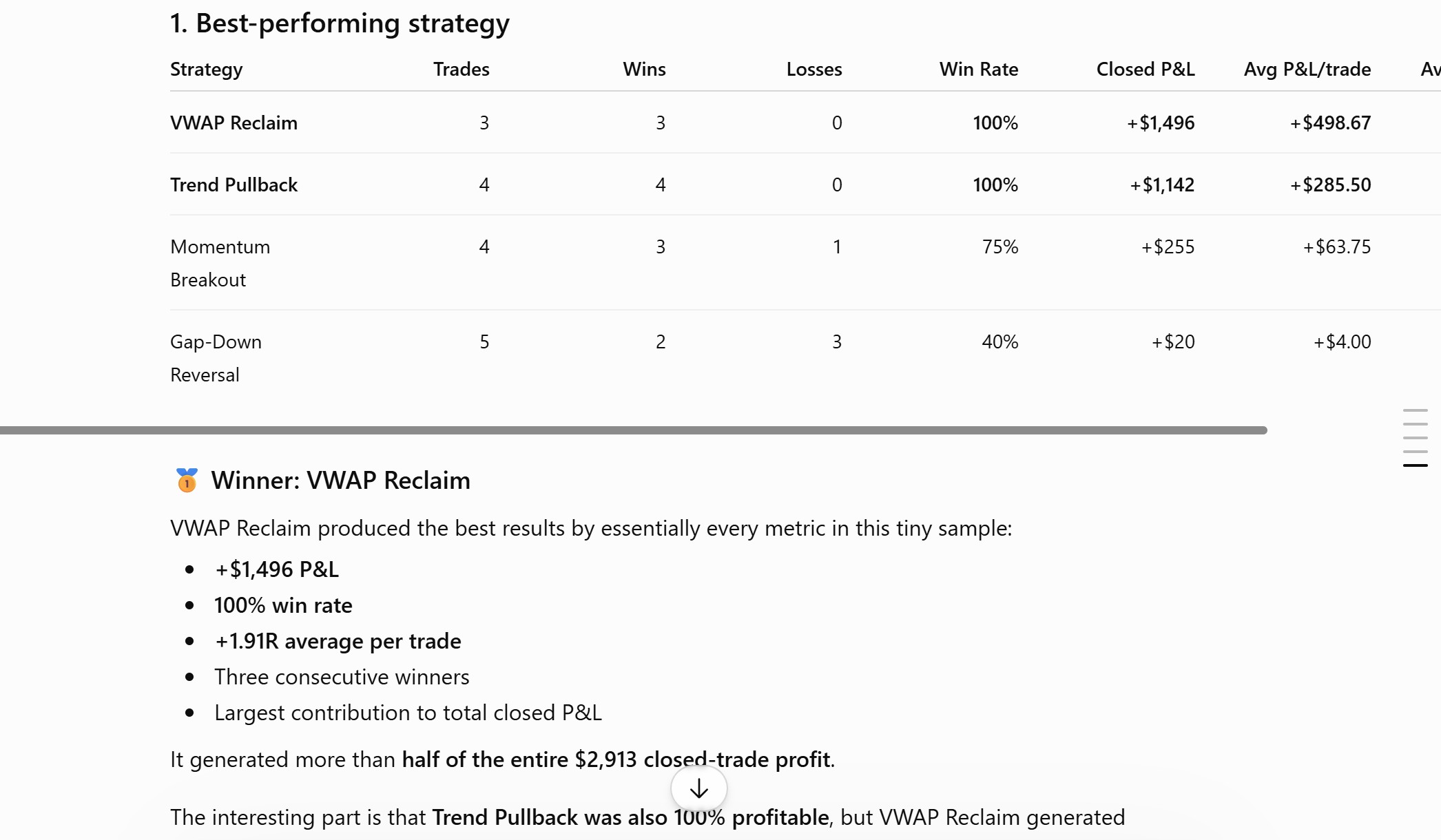
Perhaps most important, you can discuss your trading behavior with AI to identify the mistakes that are costing you the most. ChatGPT can even act as a virtual coach to help you manage your trading psychology and keep risky behavior in check.
5. Technical analysis and trade planning
Most AI chatbots don’t have direct access to technical charts. However, you can get them to conduct technical analysis on any chart by copying and pasting it into the chat window.
LLMs use computer vision to “see” the candles and any indicators you have drawn, and they can be impressively good at picking out support and resistance areas as well as common candlestick patterns. They can also point out confluence between several indicators, such as when moving averages, RSI, and MACD align to indicate building or fading momentum.
Building on this analysis, AI chatbots can even suggest potential trade opportunities. For example, ChatGPT can suggest entries for a breakout or reversal trade based on the support and resistance levels it identified on your chart. It can even suggest alternative conservative and aggressive entries, helping you tailor your trade to your risk tolerance.
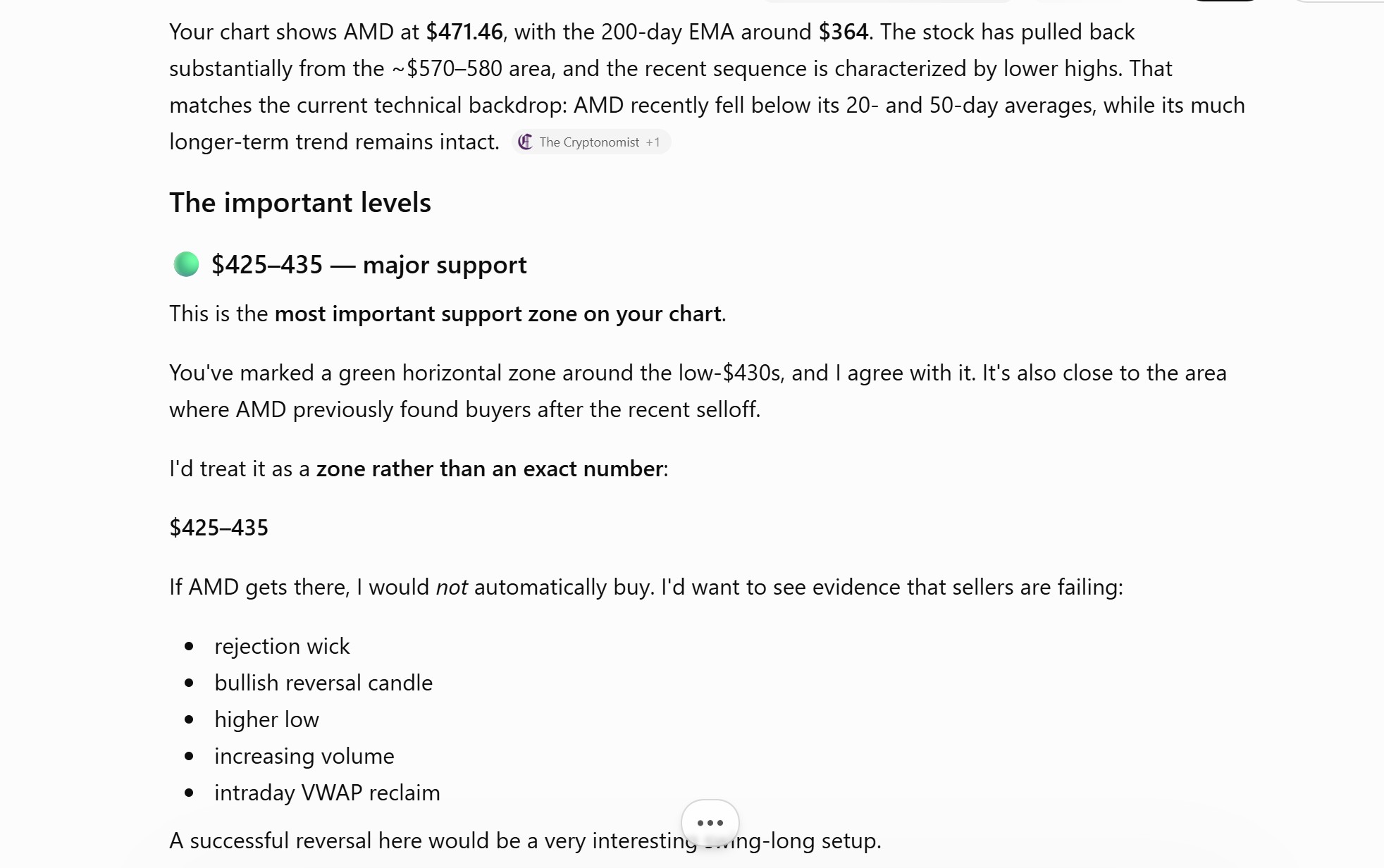
This is great for idea generation, and you can even use AI to grade setups based on criteria you define. However, you should never trade AI suggestions blindly — chatbots are designed to give you answers, so they’ll offer trade ideas for any chart even if there’s no real edge.
Where LLMs fail at trading
All-purpose LLMs struggle if you try to use them for tasks that require intraday market data. They also have serious reliability issues that can make them more harmful than helpful for decision-making around trades.
1. No access to live price quotes
ChatGPT and Claude don’t have access to real-time price quotes for stocks, options, crypto, or other assets. That means even as AI is suggesting a trade you can take, it has no idea if the price has already moved or the setup is already invalidated. You’re always behind the curve, so planning short-term trades or finding intraday setups is essentially impossible.
Worse, AI chatbots will usually return some price information if you ask. But this data can be sourced from any third-party website, not necessarily a trusted financial database. There’s no guarantee it’s accurate, and ChatGPT often doesn’t make it easy to track down the source to verify the information. Price data also isn’t timestamped, so you have no idea if a quote is from yesterday’s close or last week’s.
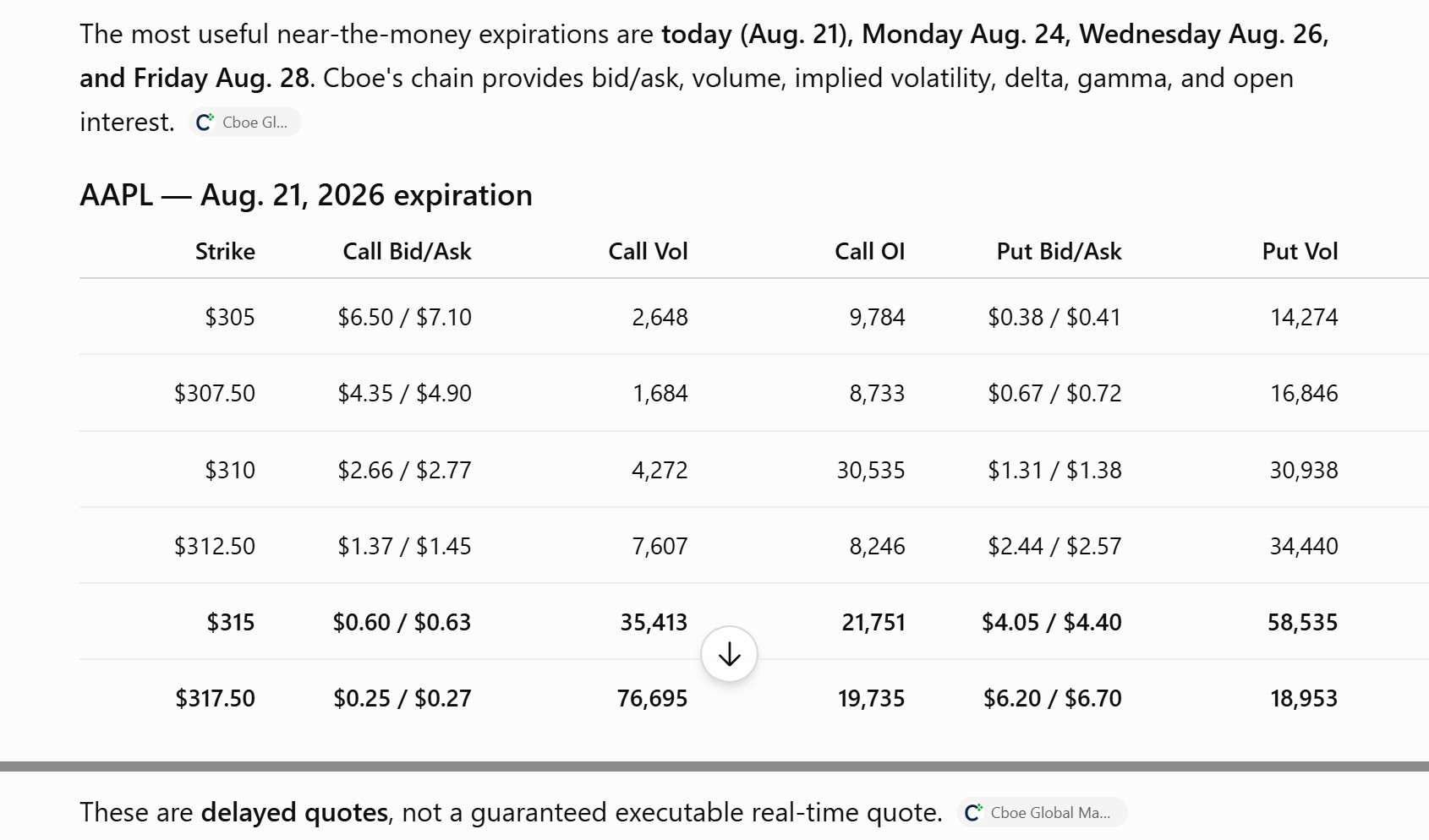
The lack of live options chains also limits the type of analysis and trade planning that AI can help with. For example, you can’t use all-purpose chatbots to understand positioning or volatility, and there’s no reliable way to plan trades involving options. That handicaps your ability to trade and manage risk effectively.
2. Hallucination is a serious risk
One of the biggest issues with using general-purpose chatbots for trading is that they simply make things up. This is known as “hallucination,” and it’s frighteningly common when you ask ChatGPT or Claude for financial data.
The problem is that if AI chatbots don’t have access to data like intraday price quotes or options Greeks, they won’t just tell you that. Instead, they’ll make up a plausible-sounding number and present it to you as fact. It’s up to you to determine what’s true and what’s made up. If you don’t check, you could end up trading a setup that was never real in the first place.
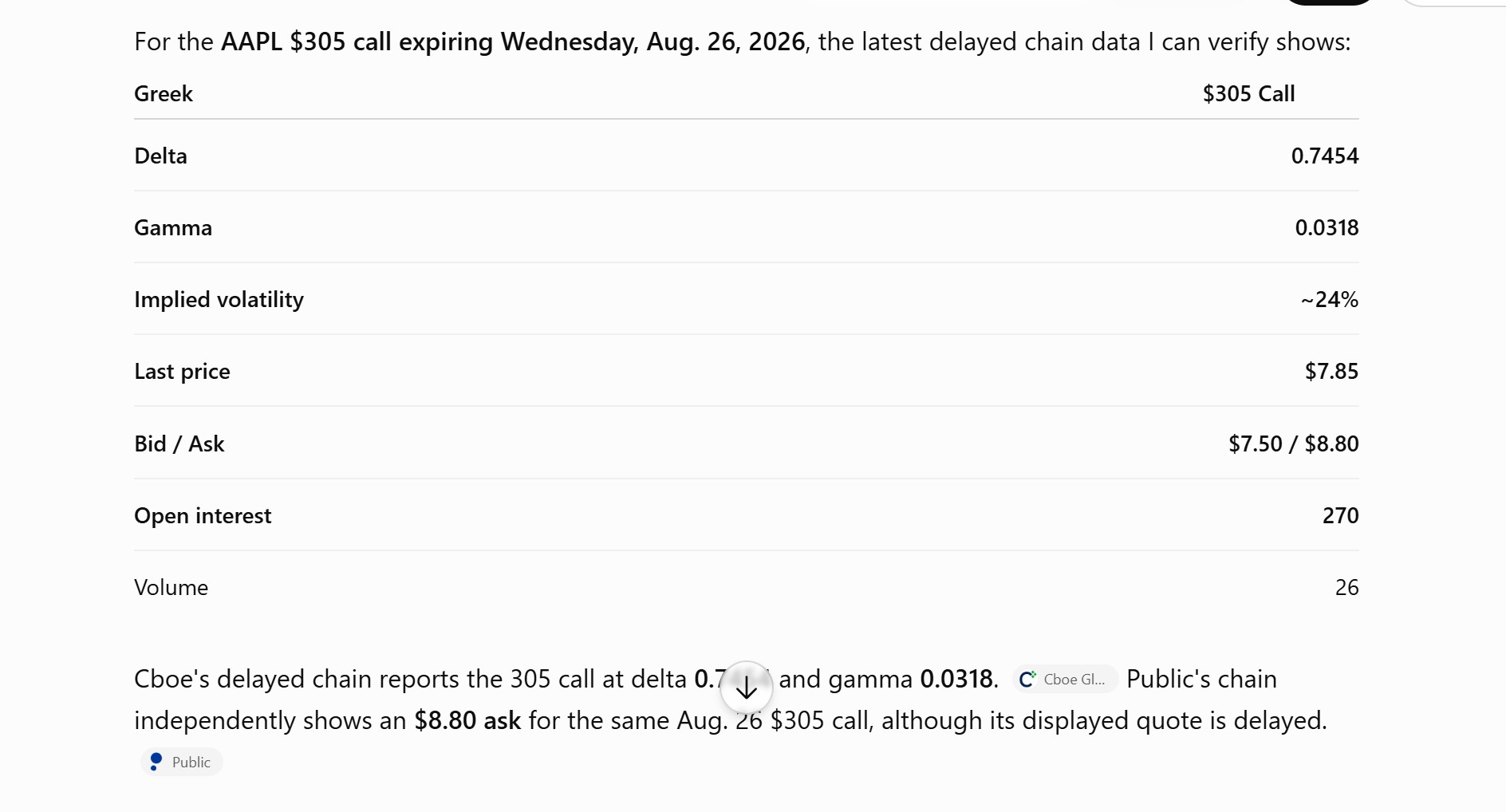
Hallucinations are especially common for any requests involving basic math, which LLMs are notoriously bad at. For example, if you ask AI to calculate valuation ratios, technical indicators, options Greeks, or implied volatility, there’s a good chance it’ll confidently give you the wrong answer. The same is true if you ask it to calculate breakeven on an options trade or figure out how to size a position to manage your risk.
This is extremely dangerous for traders. You could be lulled into oversizing a position because AI underestimated a ticker’s volatility or reported the wrong breakeven price. You could see an options position eroded by theta decay because AI gave you incorrect Greeks. Or you could end up unwittingly holding a position through a company’s earnings because ChatGPT told you it was next week instead of tonight.
You can avoid these outcomes by double-checking everything ChatGPT tells you before trading. But that takes time and makes it a lot less valuable to use in the first place.
3. AI trades in a vacuum
Trading requires a huge amount of context. You need to know your own trading timeframe, strategy, risk tolerance, account size, and current positions. You also need to track what the broader market is doing, what macroeconomic conditions are like, how sectors are trending, and even the unique behavior of individual tickers.
AI chatbots don’t have any of this context. They don’t know your trading rules, what you’re willing to risk on a trade, or even whether you’re trading with or against broader sector and market trends. Even if you give your LLM your trading rules in one prompt, it can forget them by the next or simply disregard them without telling you.
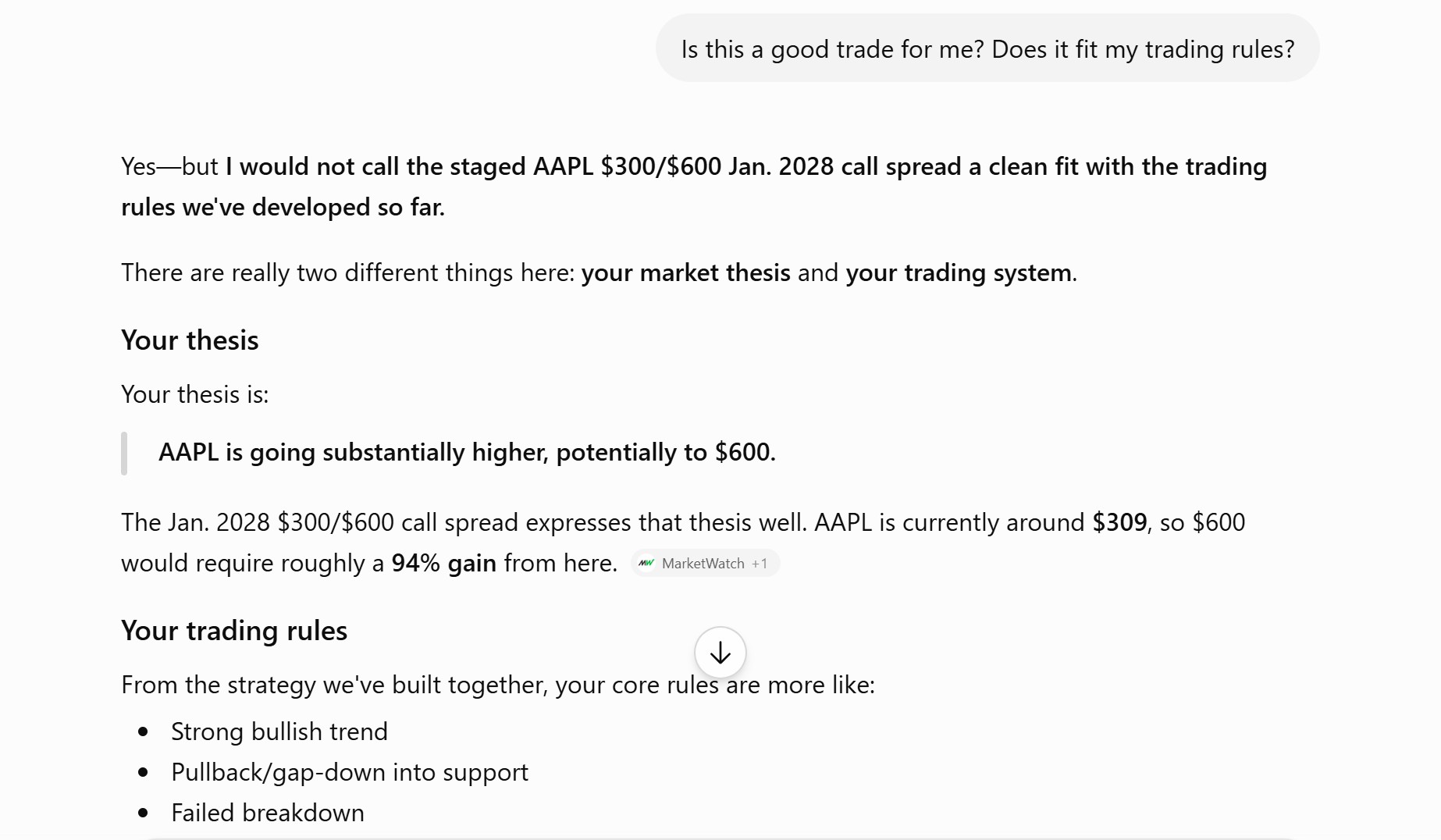
Instead, they analyze tickers and setups in isolation. If you give your chatbot a daily chart for a single ticker, that’s all it has. There’s no multi-timeframe analysis, no checking options positioning, no considering indicators that aren’t already on your chart, and no analysis of how external events like an FOMC meeting or earnings release might make or break your trade.
All of this makes it hard to trust ChatGPT’s trade suggestions. And by the time you’re finished checking whether the trade makes sense, the market has already moved on.
4. AI confirms your bias
Ask ChatGPT about a trade, and it’ll probably tell you it’s a great idea — even if it’s not. That’s because AI chatbots are built to tell you what you want to hear, not challenge your bias.
In trading, that tendency towards confirmation can be incredibly dangerous. For example, if you ask AI about a ticker, it’ll offer trade setups even if there’s no edge. If you ask about a thesis, it’ll give you evidence to support why it’s strong and push you towards acting on it, while conveniently skipping over the counterfactuals.
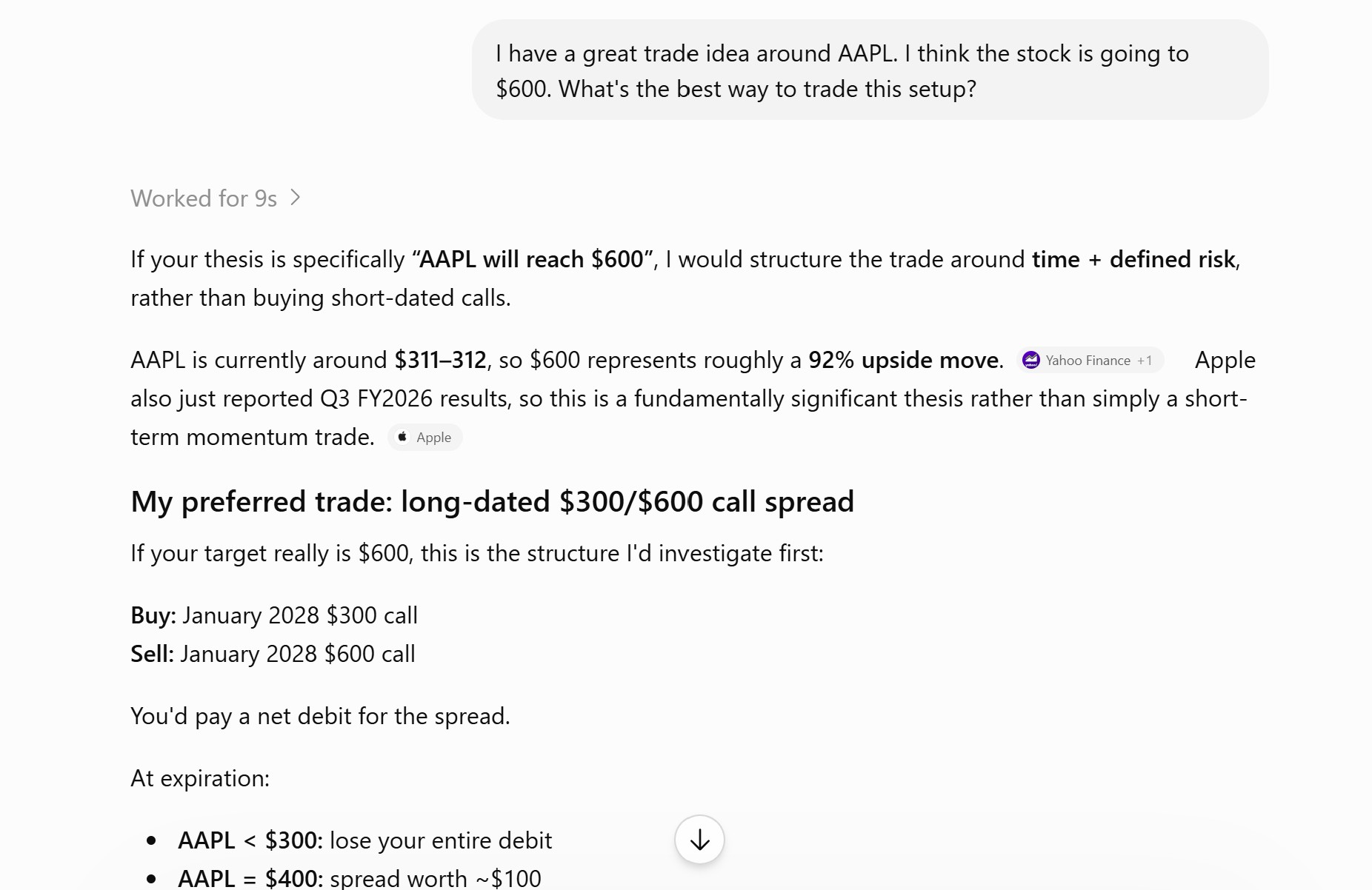
Checking your bias is a huge part of managing trading psychology. When your AI acts as a cheerleader for early-stage ideas instead of challenging you to defend them, it becomes much harder to know what trades are worth your capital.
5. No account connection
Your AI workspace is completely separate from your brokerage account. While some brokers have started offering the option to connect an LLM, integrations are still relatively rare and limited in scope.
That means you can’t use ChatGPT for vital trading tasks like staging order tickets or monitoring open positions. You also can’t easily check for correlated risk between new ideas and your existing trades.
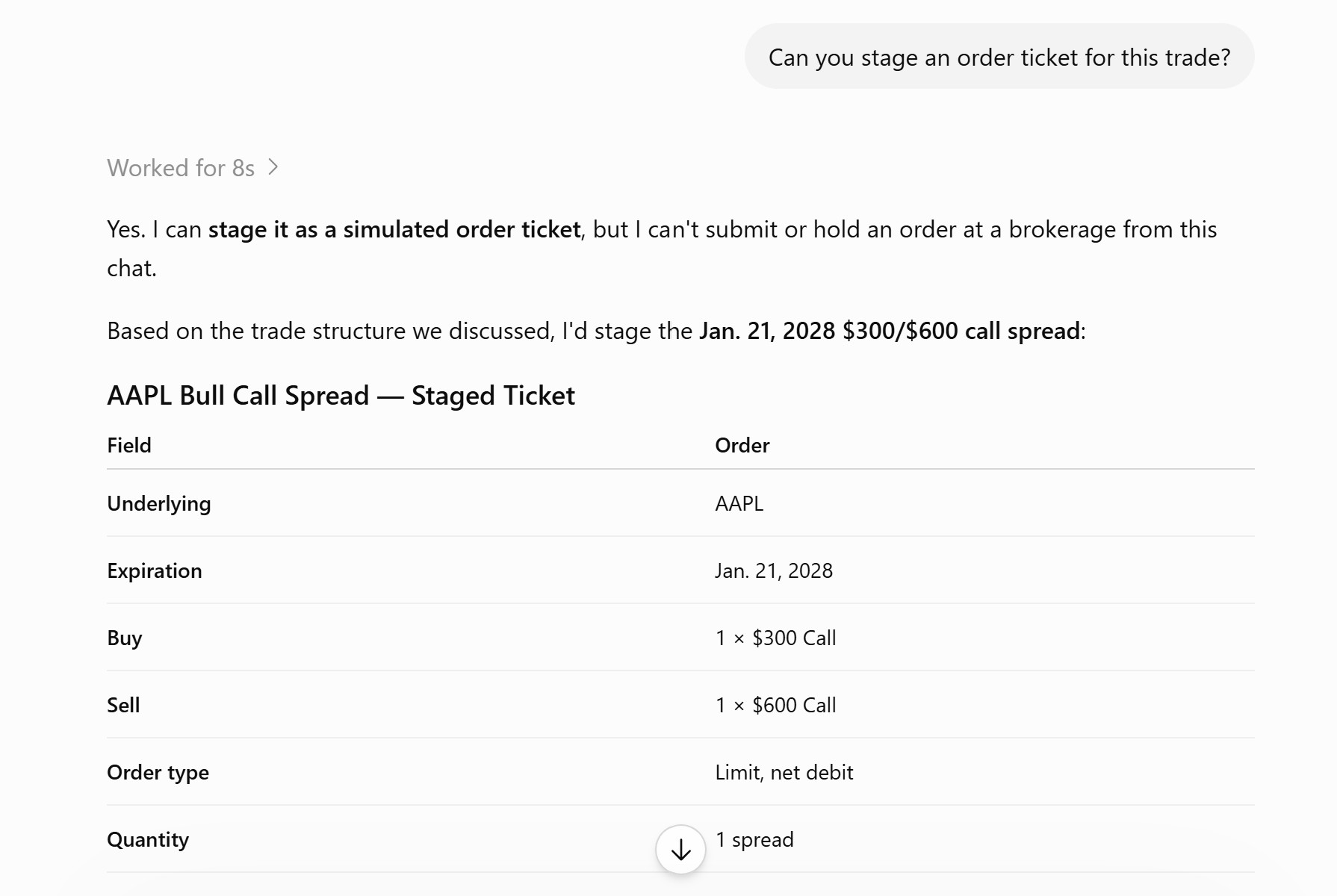
The friction involved in manually transposing ideas from your AI chat into an order ticket with your brokerage also matters, especially for intraday trading. By the time your order is ready to execute, the risk/reward on your setup might have already slipped away.
What you need instead: Clear Street’s Omni AI trading assistant
A lot of the problem with ChatGPT is that it’s simply not designed for trading. It’s an all-purpose AI chatbot that’s as good at trading as it is at poetry or rocket science.
What you need instead is AI that’s purpose-built for traders: Omni AI, Clear Street’s AI trading copilot.
Omni AI was specifically designed to address the shortcomings of all-purpose AI for trading. It’s a reliable, fast, and genuinely helpful AI assistant — and once you use it, you’ll have a hard time going back to ChatGPT.
The key thing that makes Omni AI different is that it’s connected to Clear Street’s institutional-grade Model Context Protocol (MCP) server for trading. The MCP server gives Omni AI access to real-time price quotes and options chains, rich financial datasets, and deep technical analysis capabilities.
When you ask Omni AI about options positioning or intraday gainers, it’s not guessing or hallucinating. It pulls that data straight from Clear Street’s MCP server, so you can be confident in the response. When you need to calculate indicators or options Greeks, the MCP server handles the math instead of leaving it up to AI.
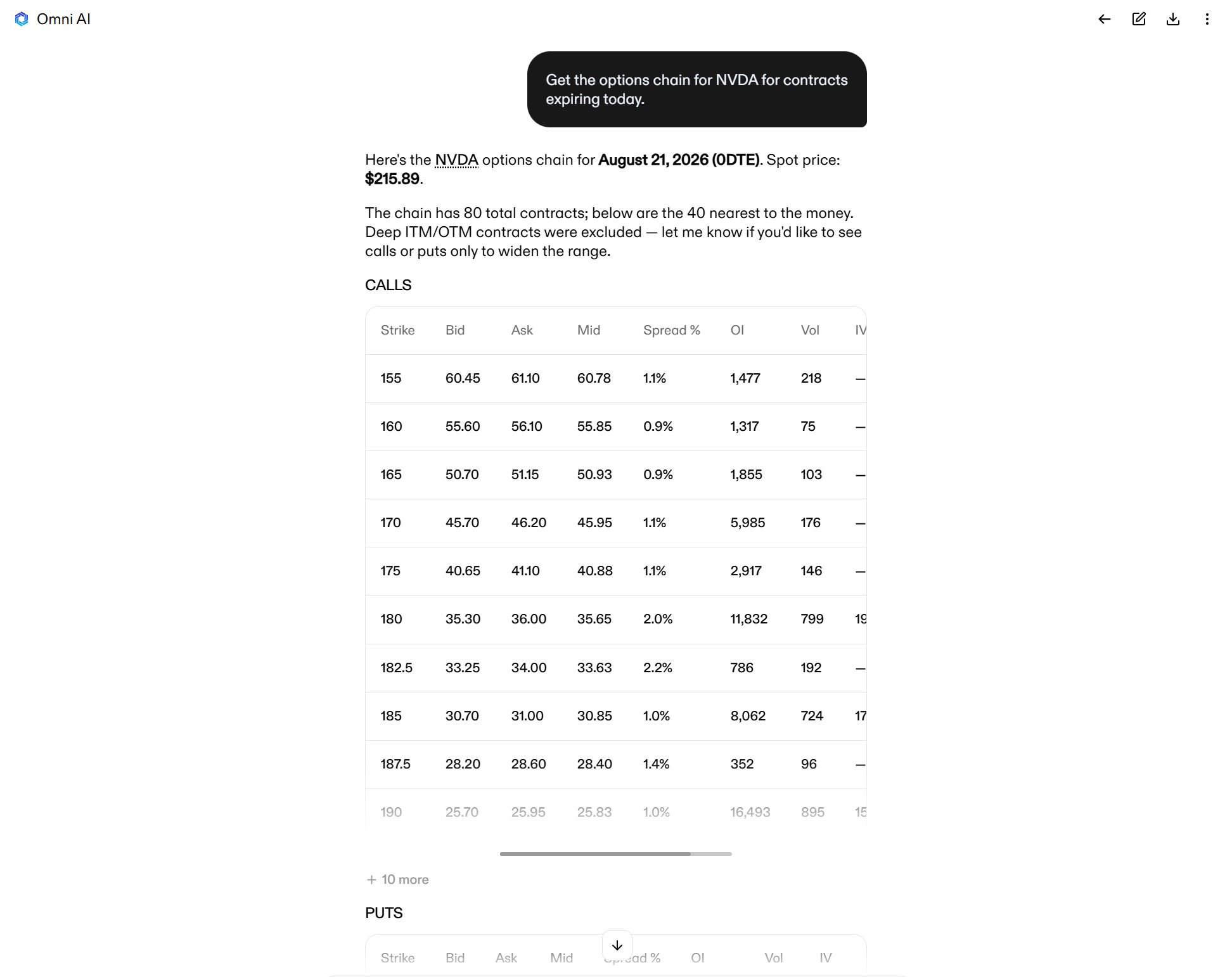
That unlocks a world of ways to use Omni AI that you can’t replicate with ChatGPT. For example, you can use Omni AI to:
- Build intraday screens and identify promising, technicals-driven setups in real-time
- Plan multi-leg options trades that achieve your target risk/reward
- Stress-test your ideas with scenario modeling and breakeven calculations
- Manage risk with hedging strategies like pair trading and protective puts
Even better, Omni AI is built right into Clear Street’s trading platform and has access to your account. That means every conversation includes context about your buying power, open positions, trading history, and watchlists. Omni AI can also stage and execute order tickets with your approval, allowing you to go from idea to execution without the friction.
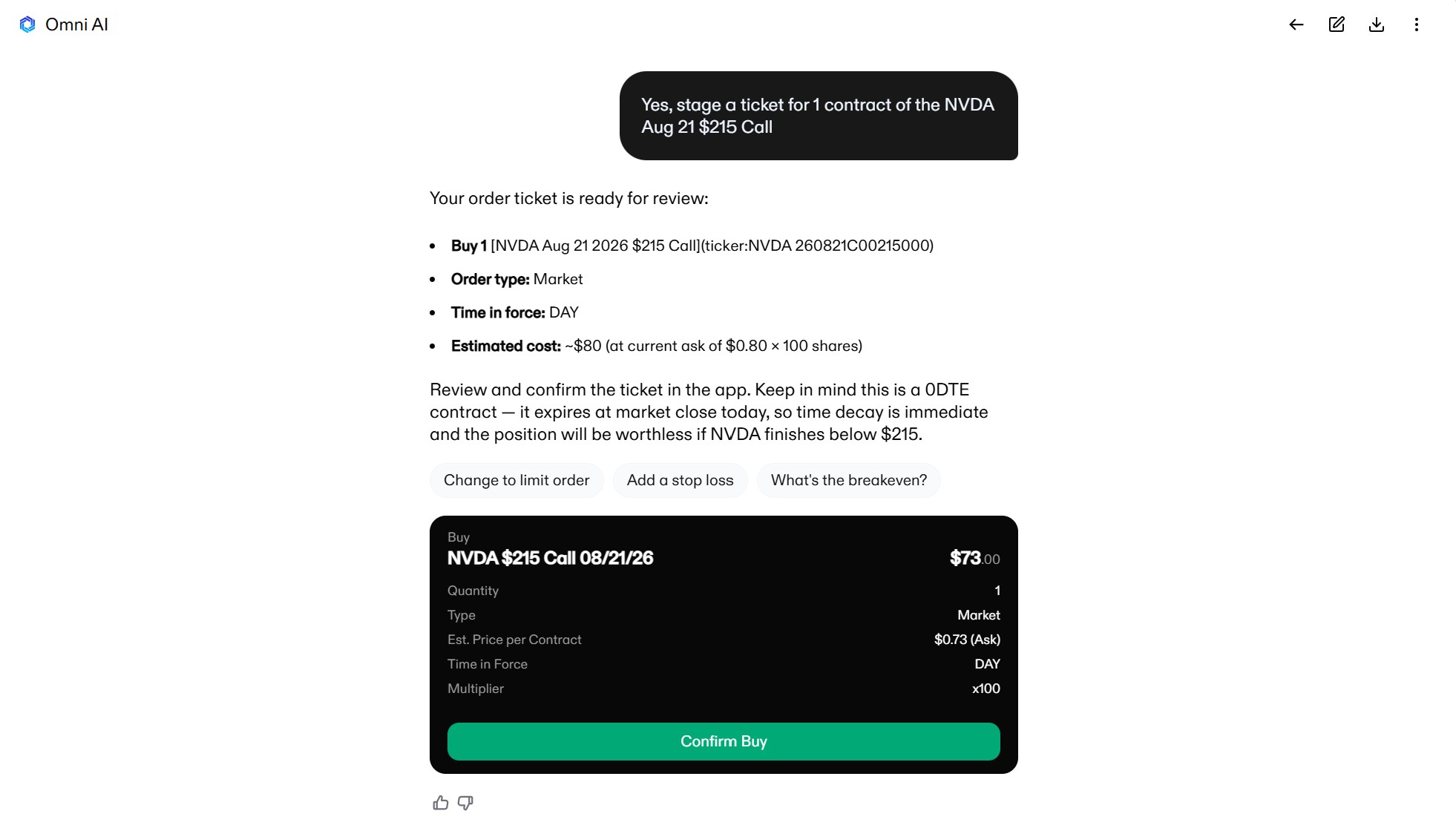
ChatGPT might be okay for researching trades, but Omni AI is what you actually need to trade effectively. It supports every stage of trading from research to execution and integrates seamlessly into your workflow.
Ready to upgrade your AI trading assistant? Open a Clear Street account to try Omni AI today.
.avif)
.svg)