Omni
Nov 6, 2026
Clear Street
Using AI to Analyze SEC Filings

Learn how to use AI to analyze SEC filings so you can understand financial reports, monitor insider activity, and build a strong trade thesis.
SEC filings provide key updates about a company’s financial performance, events that could impact the stock price, and even who’s holding large positions and who’s changing those holdings. So, they’re a key source of information that traders need to monitor closely.
The problem is that SEC filings can be dense and hard to read, making it hard to extract useful information quickly. But AI can now parse these filings for you and highlight the most important takeaways in seconds. It gives every trader a chance to use SEC filings to gather information and build a stronger thesis.
In this guide, we’ll show you exactly how to use AI to analyze SEC filings and share example prompts you can use to dig into these documents for any company.
Giving Your AI Access to Real-time SEC Filings
You can use any AI chatbot, including Claude, ChatGPT, or Gemini, to analyze SEC filings. But before you start, remember that most chatbots don’t have access to real-time financial information by default. Any AI can access filings in the SEC’s Electronic Data Gathering, Analysis, and Retrieval (EDGAR) database, but it’s not flawless, so make sure you are looking at relevant, up-to-date filings.
There are several approaches that may be more effective.
First, you can download filings directly from the EDGAR database and upload them into your AI conversation. But this can be time-consuming, especially if you want to analyze filings for many different companies.
A better alternative is to connect your AI to a financial model context protocol (MCP) server that provides access to the latest SEC filings. Clear Street’s MCP server, for example, gives Claude and ChatGPT access to real-time SEC filings, price quotes, market news, and more, enabling you to use these chatbots for a variety of analysis workflows.
Another option is to use Clear Street’s Omni AI trading assistant, which has access to up-to-date SEC filings and real-time market data by default. Omni AI can not only answer questions about SEC filings, but also help you evaluate trading opportunities and even place trades in your brokerage account. So, it’s a good option if you want to go from company analysis to trade planning to execution in a single workflow.
Analyzing Financial Performance
Once your AI chatbot has access to up-to-date filings, you can start your analysis by looking at 10-K and 10-Q reports. These are companies’ annual and quarterly financial filings, where they offer in-depth financial statements, provide management’s commentary on a company’s performance, and discuss potential risks on the horizon.
There’s a lot of information in these reports, which is why using AI to analyze them can be so helpful. You can ask AI to summarize key financial data, like profitability and revenue, as well as have it highlight key takeaways from management’s discussion of the company’s performance and risks.
For example, if you’re using Omni AI, you can ask:
Summarize AMZN’s latest 10-Q filing. Where does management think the company is performing well, and what are the most important risks to be aware of?
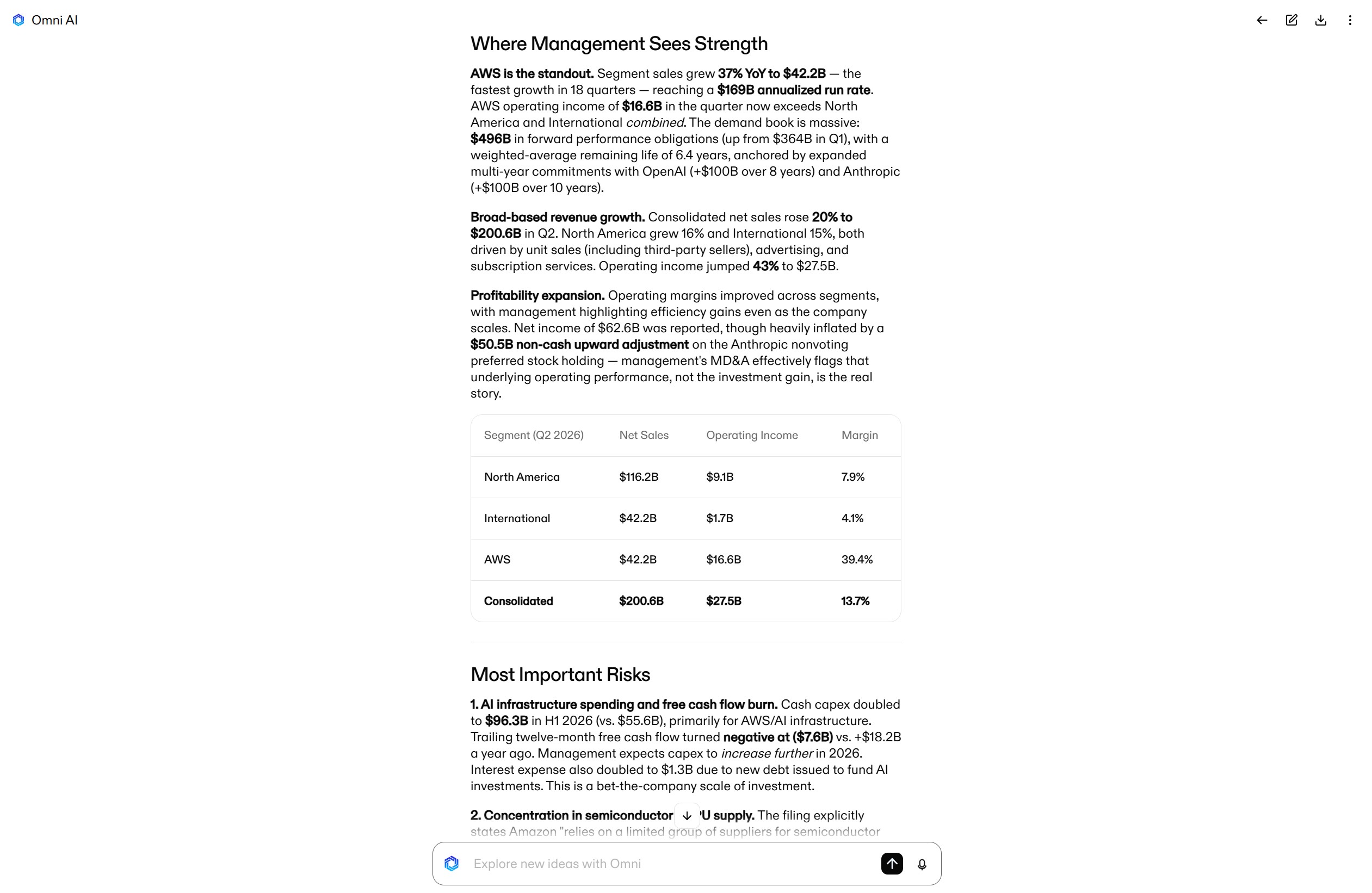
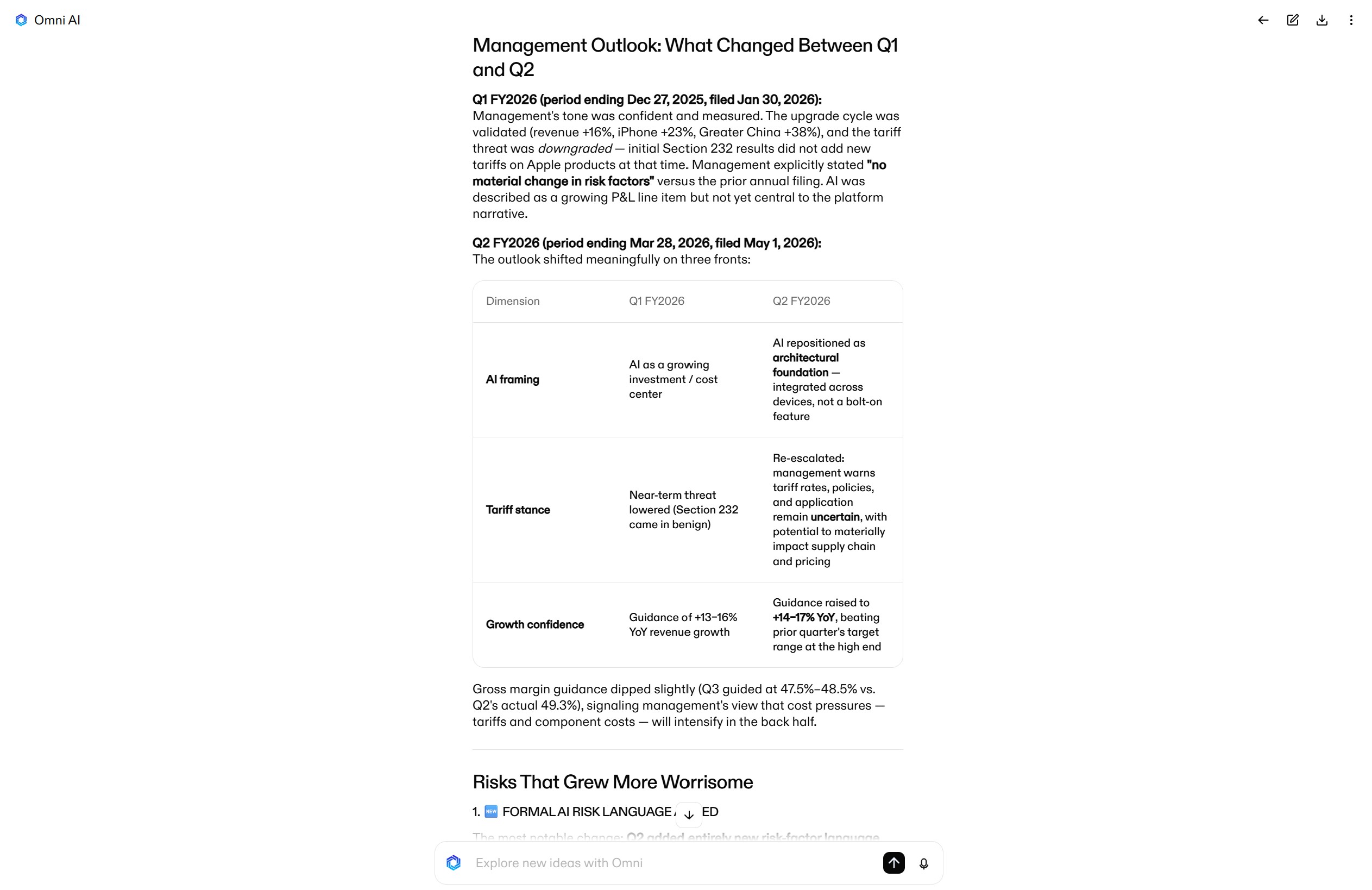
Even better, you can use AI to compare one 10-Q filing with another. This comparative analysis is useful for monitoring trends in financial performance, like checking the quarter-over-quarter rate of earnings growth. But it also enables you to track changes in management’s guidance—for example, whether a company is meeting its stated goals or whether potential risks are evolving from one quarter to the next.
For example, ask Omni AI:
Compare AAPL’s Q2 10-Q filing with its Q1 10-Q filing. Is there any difference in how management describes its expectations for the next year? Have any risks become more worrisome to management?
There’s much more information contained in 10-K and 10-Q forms that you can learn about with AI. For example, you can ask about:
- Management’s view on the overall business environment (including headwinds and tailwinds)
- What segments inside a company are driving profits and losses
- Whether management discussed upcoming share buybacks or dilution events
- Where the company plans to spend money or invest in the months ahead
- Whether the company’s debt obligations are growing or shrinking
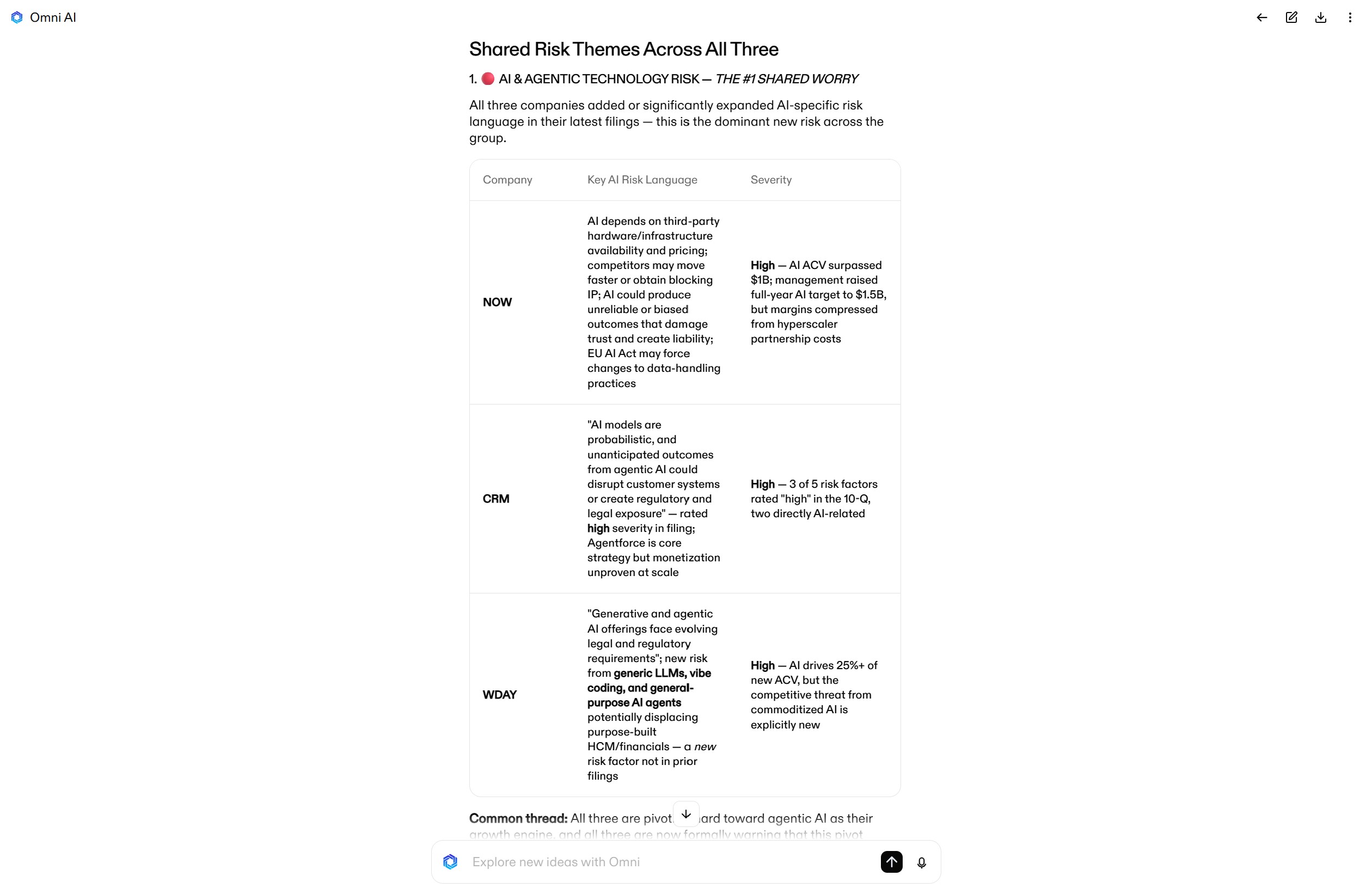
Keep in mind that AI can also compare filings across companies in the same sector. This is a great way to not only compare financial performance across companies, but also identify common themes that management teams are identifying. For example, if multiple companies’ management teams identify the same tailwinds or risks, it’s likely worth paying attention.
Here’s what you can ask Omni AI:
Look at the latest 10-Q reports for ServiceNow, Salesforce, and Workday. What common risks is management identifying across these companies, and how worried are they about them?
Analyzing Company Events
Companies file 8-K reports with the SEC when there are events that are important to shareholders, like a major cybersecurity incident, management changes, or an acquisition. These filings are usually shorter and easier to read than 10-K and 10-Q filings, but AI can help you quickly summarize the takeaways.
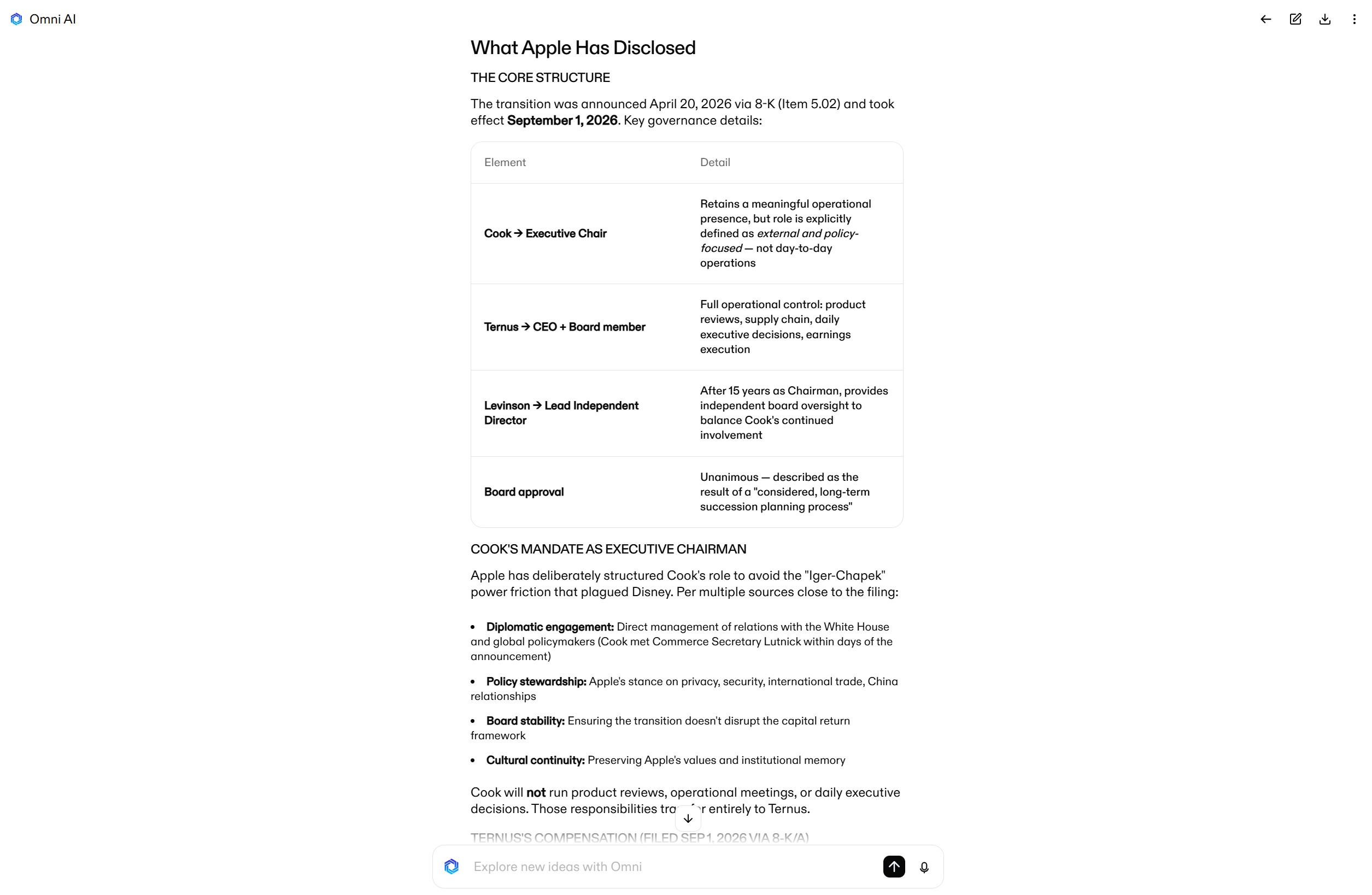
Even better, AI can put company events in context and synthesize details spread across multiple 8-K filings. For example, how Apple plans to transition from CEO Tim Cook to John Ternus is explained across several 8-K filings, and Omni AI can summarize the most important things you need to know from both:
What information has Apple provided about the transition from Tim Cook to John Ternus, and how is this likely to impact the company in the short term?
For mergers and acquisitions, you can ask Omni AI about the two companies and the synergies or risks identified in the 8-K filing. For safety or regulatory incidents, you can ask Omni AI about the disclosed severity of the incident and how stocks in the same industry have reacted to adverse events in the past.
Analyzing Insider Activity and Company Ownership
SEC filings can also reveal information about who owns shares of a company and when they’re buying or selling. Company insiders must report stock trades using SEC Forms 3, 4, and 5, while large outside investors who acquire 5% or more of a company’s stock must file Schedule 13D or 13G forms.
You can analyze these forms to better understand buying and selling behavior by “smart money” investors. For example, ask Omni AI:
Analyze insider and institutional trades around MSFT over the past quarter. Is there net buying or selling, and are there any patterns that suggest accumulation or distribution by insiders?
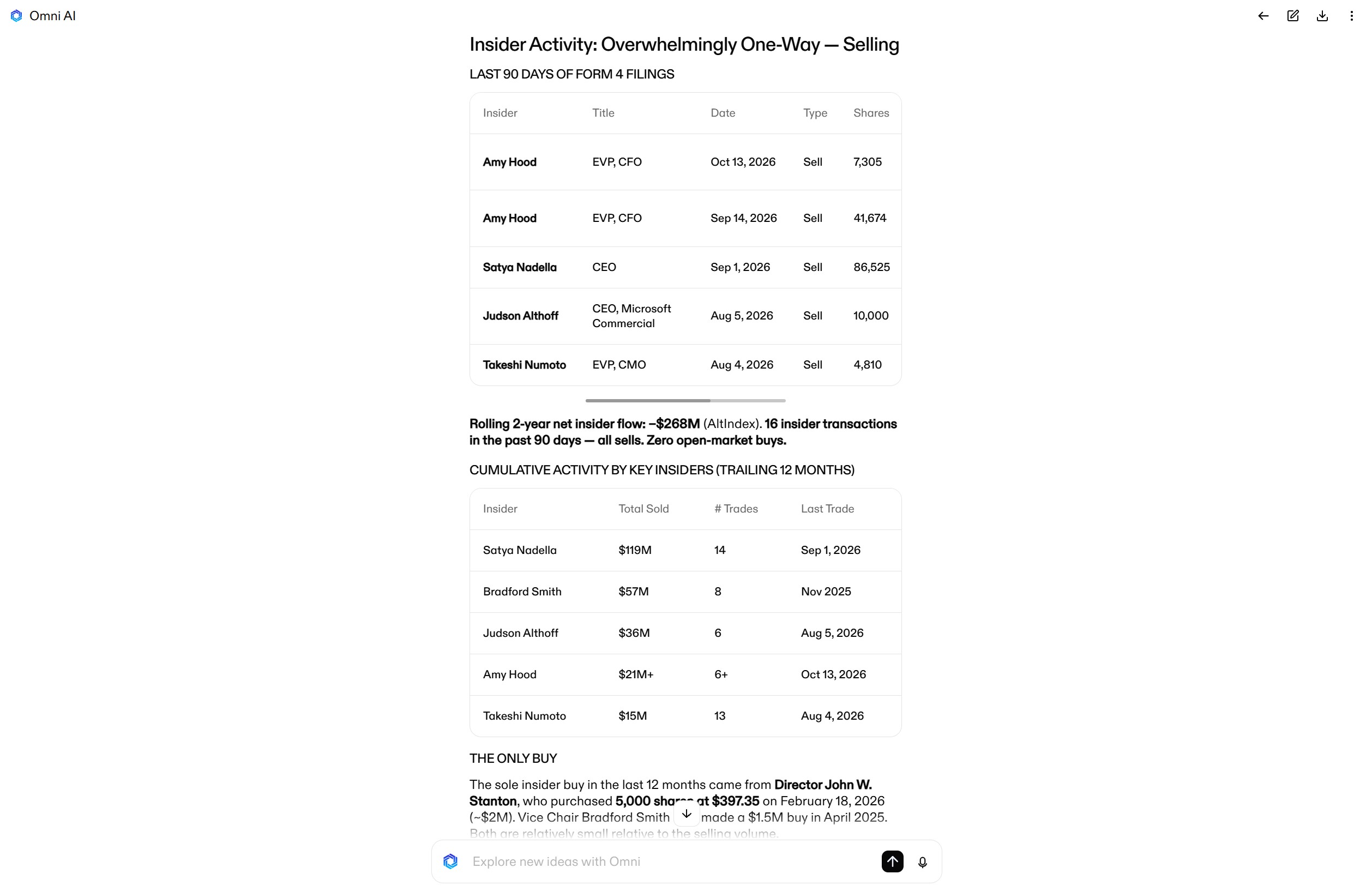
AI can also help you identify cluster buying or selling—when multiple company insiders trade shares in a short period of time—and tell you the average price of those trades. Cluster buying and selling can be an actionable signal that company insiders are bullish or bearish on their company’s stock.
In addition, whether an outside investor files Form 13D or 13G can tell you a lot about intent. Passive institutional investors use Form 13G, while activist investors use Form 13D—so a 13D being filed can be a major catalyst. You can use AI to dig deeper into 13D filings to find out what changes an activist investor plans to demand.
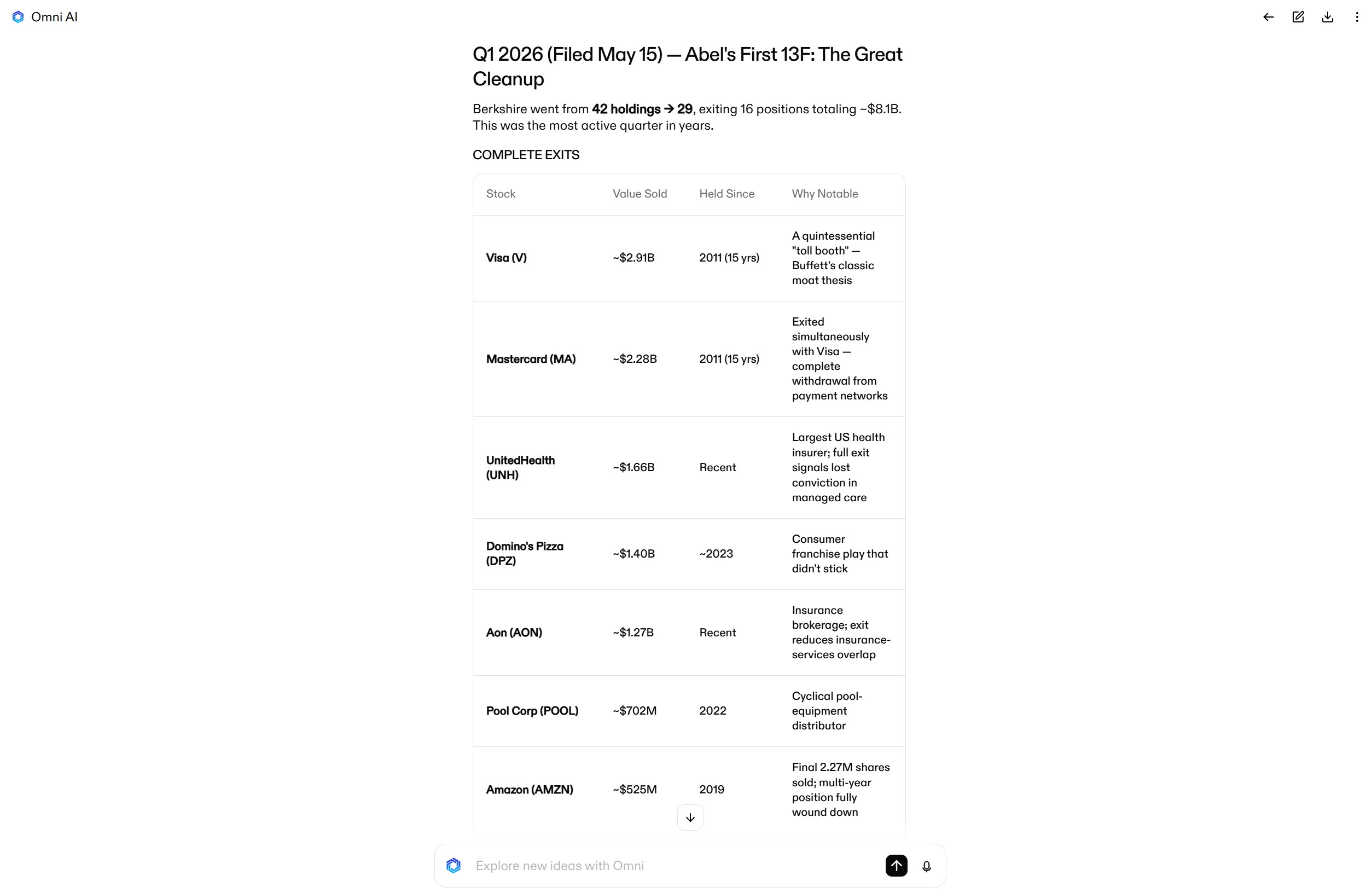
Another approach is to dig into what individual investment firms are doing. Firms with more than $100 million in assets under management file Form 13-F quarterly to report changes in their holdings. So, you can closely follow firms to better understand their view of the market landscape and individual companies.
For example, you can ask Omni AI:
What stocks did Berkshire Hathaway buy or sell last quarter? Which trades are unusual for the firm and why?
Analyzing IPOs with S-1 Filings
Companies looking to go public through an IPO are required to file Form S-1, which includes a prospectus with details about the company’s financials, outlook, and risks. AI is very effective at summarizing key takeaways from these documents, including details like how a company’s shares will be distributed and how corporate governance will work.
For example, you can ask Omni AI to dig into a company’s S-1 to understand share lock-ups around the IPO and what triggers might lead to dilution events:
Analyze the SpaceX S-1 filing for dilution events. What triggers do I need to watch for that could cause shares to enter the market?
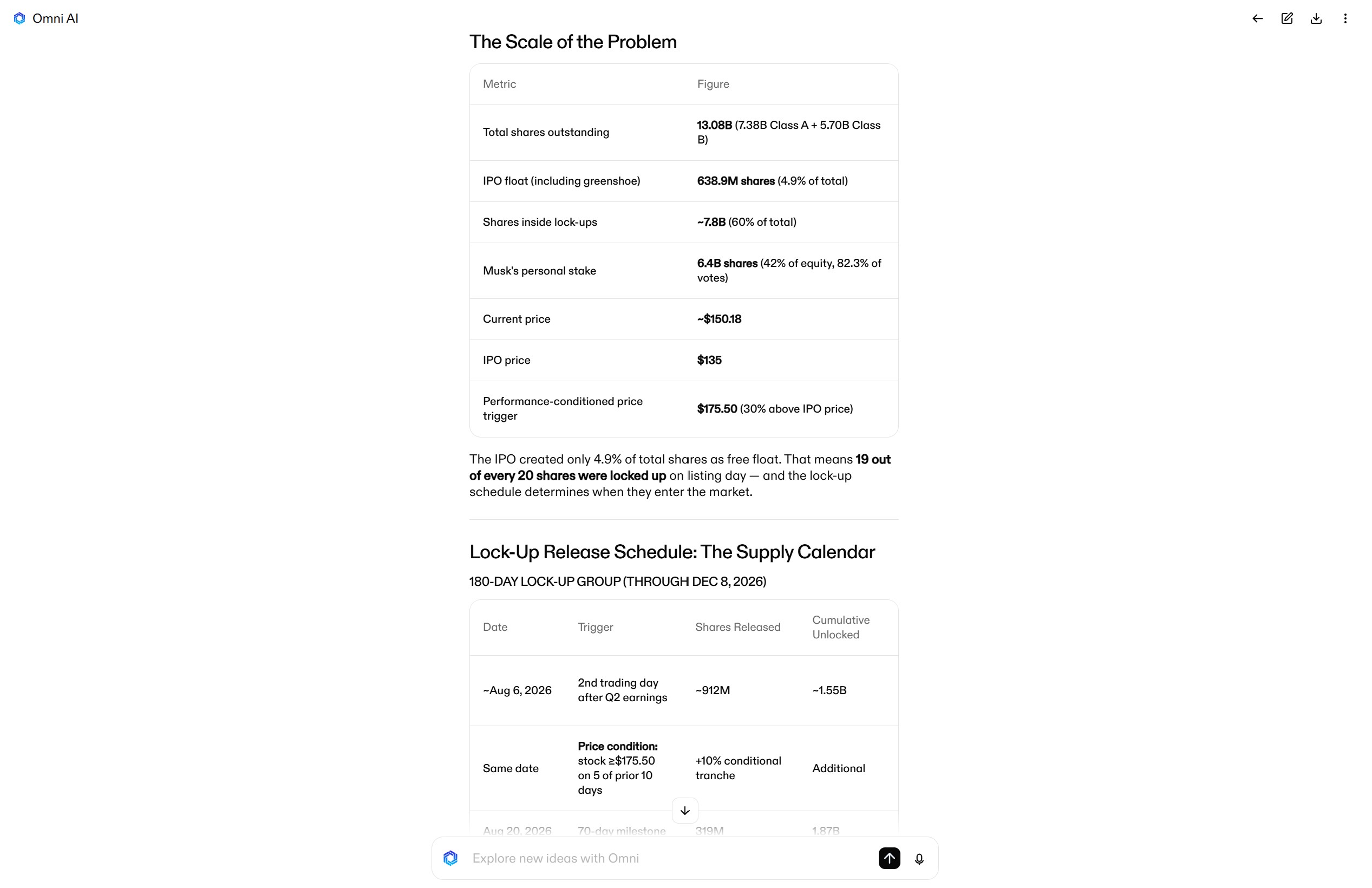
Using AI to analyze 10-K and 10-Q filings from companies in the same sector as an IPO stock can also help you better understand the market environment that a new company is launching into.
Analyze SEC Filings Quickly with Omni AI
Omni AI enables you to dig into any SEC filings in seconds so you can get comprehensive and reliable information about the market. You can perform a deep dive into a company’s financials and outlook, evaluate whether company insiders are buying or selling, and compare results across an entire sector. Plus, Omni AI supports news analysis, earnings call analysis, technical analysis, and more, so you can quickly form an evidence-backed thesis and build your own trade plan.
Open a Clear Street account today to try Omni AI for yourself and analyze SEC filings with ease.
Products and services offered by Clear Street LLC, member FINRA, SIPC, CFTC and NFA. Additional information about Clear Street is available on FINRA BrokerCheck, including its Customer Relationship Summary.
Clear Street does not provide investment, legal, regulatory, tax, or compliance advice. Consult professionals in these fields to address your specific circumstances. These materials are provided for informational purposes only and subject to change without notice or obligation to replace any information contained therein. This is not an offer, solicitation of an offer, or advice to buy or sell securities, or open a brokerage account in any jurisdiction where Clear Street is not registered. Securities trading, particularly trading on margin or using options, involves significant risk and is not suitable for all investors.
Related blogs